Most of the electricity in the United States is produced using steam turbines.
A turbine converts the kinetic energy of a moving fluid (liquid or gas) to mechanical energy. In a steam turbine, steam is forced against a series of blades mounted on a shaft, thus rotating the shaft connected to the generator. The generator, in turn, converts its mechanical energy to electrical energy based on the relationship between magnetism and electricity.
In steam turbines powered by fossil fuels, such as coal, petroleum (oil), and natural gas, the fuel is burned in a furnace to heat water in a boiler to produce steam.
Fossil Fuels Generate Most U.S. Power
Coal is the most common fuel for generating electricity in the United States. In 2009, 45% of the Country's nearly 4 trillion kilowatthours of electricity used coal as its source of energy.
Fossil Fuels Generate Most U.S. Power
Coal is the most common fuel for generating electricity in the United States. In 2009, 45% of the Country's nearly 4 trillion kilowatthours of electricity used coal as its source of energy.

Natural gas, in addition to being burned to heat water for steam, can also be burned to produce hot combustion gases that pass directly through a turbine, spinning the turbine's blades to generate electricity. Gas turbines are commonly used when electricity utility usage is in high demand. In 2009, 23% of the Nation's electricity was fueled by natural gas.
Petroleum can be burned to produce hot combustion gases to turn a turbine or to make steam to turn a turbine. Residual fuel oil, a product refined from crude oil, is often the petroleum product used in electric plants that use petroleum to make steam. Petroleum was used to generate just over 1% of all electricity in the United States in 2009.
Nuclear Power Provides About One-Fifth of U.S. Electricity
Nuclear power is a method in which steam is produced by heating water through a process called nuclear fission. In a nuclear power plant, a reactor contains a core of nuclear fuel, primarily uranium. When atoms of uranium fuel are hit by neutrons, they fission (split) releasing heat and more neutrons. Under controlled conditions, these other neutrons can strike more uranium atoms, splitting more atoms, and so on. Thereby, continuous fission can take place, creating a chain reaction releasing heat. The heat is used to turn water into steam, that, in turn, spins a turbine that generates electricity. Nuclear power was used to generate about 20% of all the Country's electricity in 2009.
Renewable Energy Sources Make Up the Rest
Hydropower, the source for 7% of U.S. electricity generation in 2009, is a process in which flowing water is used to spin a turbine connected to a generator. There are two basic types of hydroelectric systems that produce electricity. In the first system, flowing water accumulates in reservoirs created by dams. The water falls through a pipe called a penstock and applies pressure against the turbine blades to drive the generator to produce electricity.
In the second system, called run-of-river, water is diverted from a river using a relatively low dam or weir into penstocks and turbines. The dam does not store a large volume of water in a reservoir. Run-of-river power plants are more dependent on river flows than hydro plants with reservoirs for storing water which can produce electricity even when natural river flows are low.
Biomass is material derived from plants or animals (i.e. biogenic) and includes lumber and paper mill wastes; food scraps, grass, leaves, paper, and wood in municipal solid waste (garbage); and forestry and agricultural residues such as wood chips, corn cobs, and wheat straw. These materials can be burned directly in steam-electric power plants, or converted to gas that can be burned in steam generators, gas turbines, or internal combustion engine-generators. Biomass accounts for about 1% of the electricity generated in the United States.
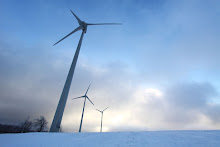
Wind power is produced by converting wind energy into electricity. Electricity generation from wind has increased significantly in the United States since 1970, but wind power remains a small fraction of U.S. electricity generation, about 1%.
Geothermal power comes from heat energy buried beneath the surface of the earth. In some areas of the United States, enough heat rises close to the surface of the earth to heat underground water into steam, which can be tapped for use at steam-turbine plants. This energy source generated less than 1% of the electricity in the Country in 2009.
Solar power is derived from energy from the sun. There are two main types of technologies for converting solar energy to electricity: photovoltaic (PV) and solar-thermal electric. PV conversion produces electricity directly from sunlight in a photovoltaic (solar) cell. Solar-thermal electric generators concentrate solar energy to heat a fluid and produce steam to drive turbines. In 2009, less than 1% of the Nation's electricity was from solar power.
SOURCE: